
OpsClarity Blog
Why Everything Waits on One Thing: Finding the Bottleneck That Is Costing You Money
By Abigale Haynes ·
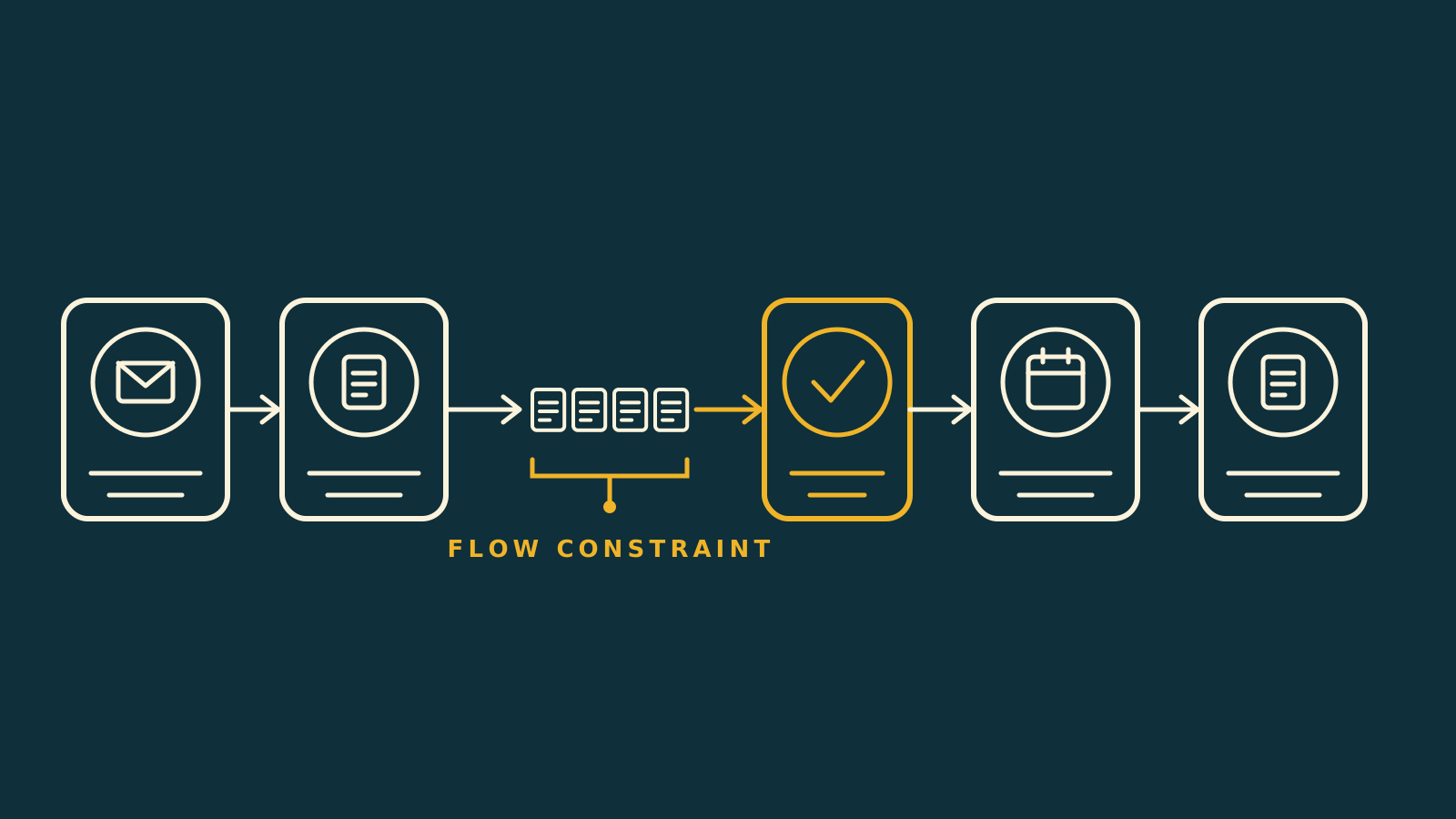
A bottleneck in business is the step that limits how quickly work can move through your operation. It might be a slow quote, a founder's approval, a missing customer detail, or one person who knows how to do a critical task.
The cost is easy to miss because it rarely appears on one invoice. Instead, work waits, customers wait, and your team spends time chasing, correcting, or re-entering information.
If you're noticing late quotes, missed follow-ups, growing rework, or people saying "I'm waiting on…," the issue may not be that everyone needs to work harder. One step may be holding up everything behind it.
Start with the queue
A bottleneck is not automatically the busiest person or the slowest task. It's the point in a process where work accumulates because it arrives faster than that step can complete it.
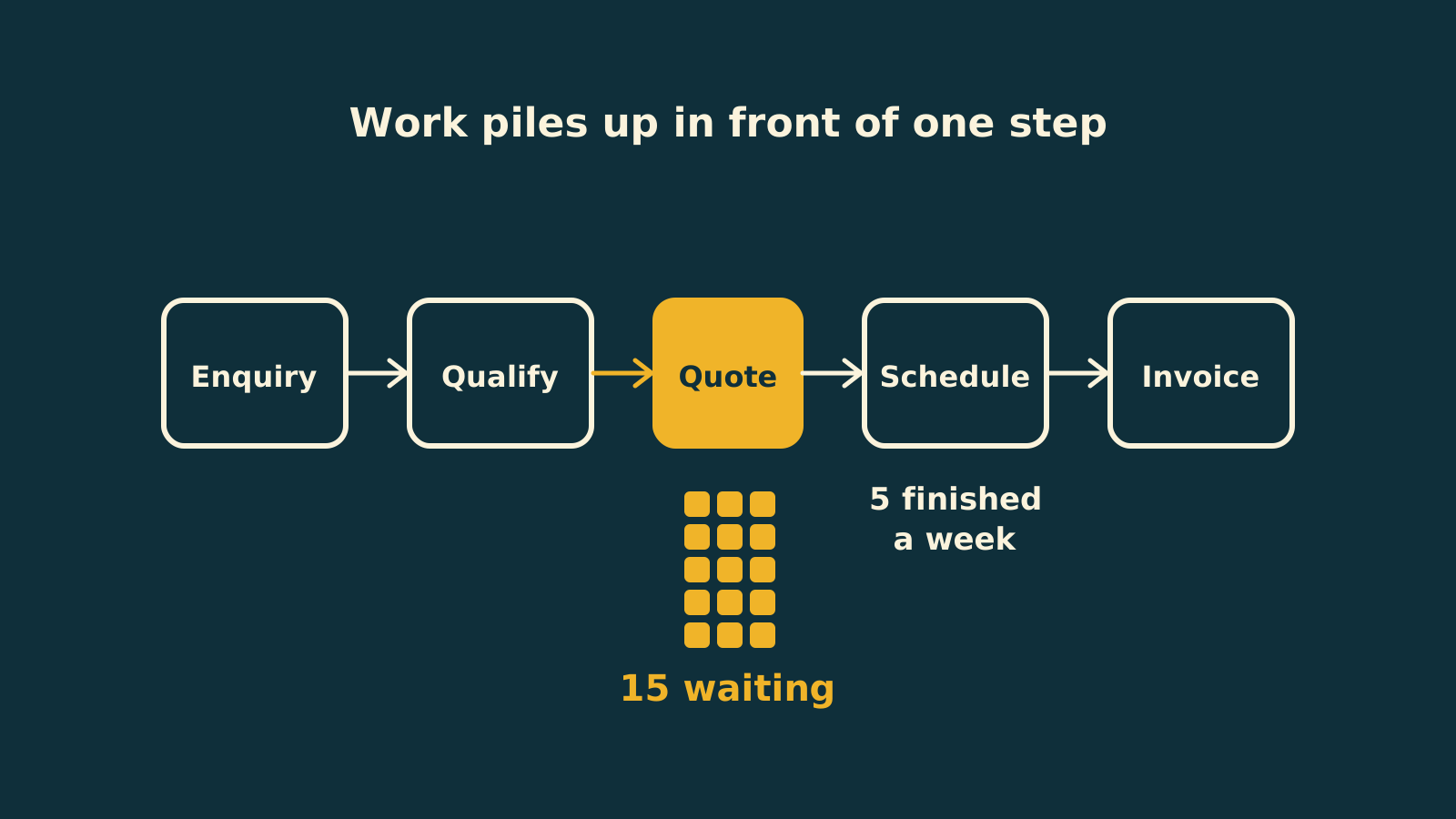
Imagine a trade business that can respond to 20 enquiries a week, prepare 12 quotes, and schedule 18 jobs. If customers are ready to move forward, but only 12 quotes get out, quoting may be limiting the flow. The team scheduling work might appear quiet because it is waiting for approved quotes.
That distinction matters. If demand is weak, adding capacity won't create more customers. If demand is there but work is stuck, finding the constraint can help you decide what to fix first.
Look for these warning signs
Start with one process that affects revenue, delivery, or customer experience. Follow the work from the moment it enters to the point where it is finished. Look for repeated evidence of waiting, not just one difficult day.
Common signs include:
- Quotes take too long. Enquiries arrive, but estimates sit in a queue or depend on one person.
- Follow-ups slip. Your team means to contact prospects or customers, but reminders are scattered across inboxes and memory.
- Rework keeps returning. Jobs are redone because information was missing, instructions were unclear, or handoffs were rushed.
- The same data gets entered twice. Customer or job details move between forms, spreadsheets, and systems by hand.
- Everything waits on one person. Work stalls for a decision, approval, password, specialist skill, or information only one person holds.
One signal by itself doesn't prove there is a bottleneck. A pile of work might be a one-off spike. A busy employee might still be completing work fast enough to keep the process moving.
Look for the pattern: where work waits, what it is waiting for, and whether that queue keeps building.
Trace where work waits
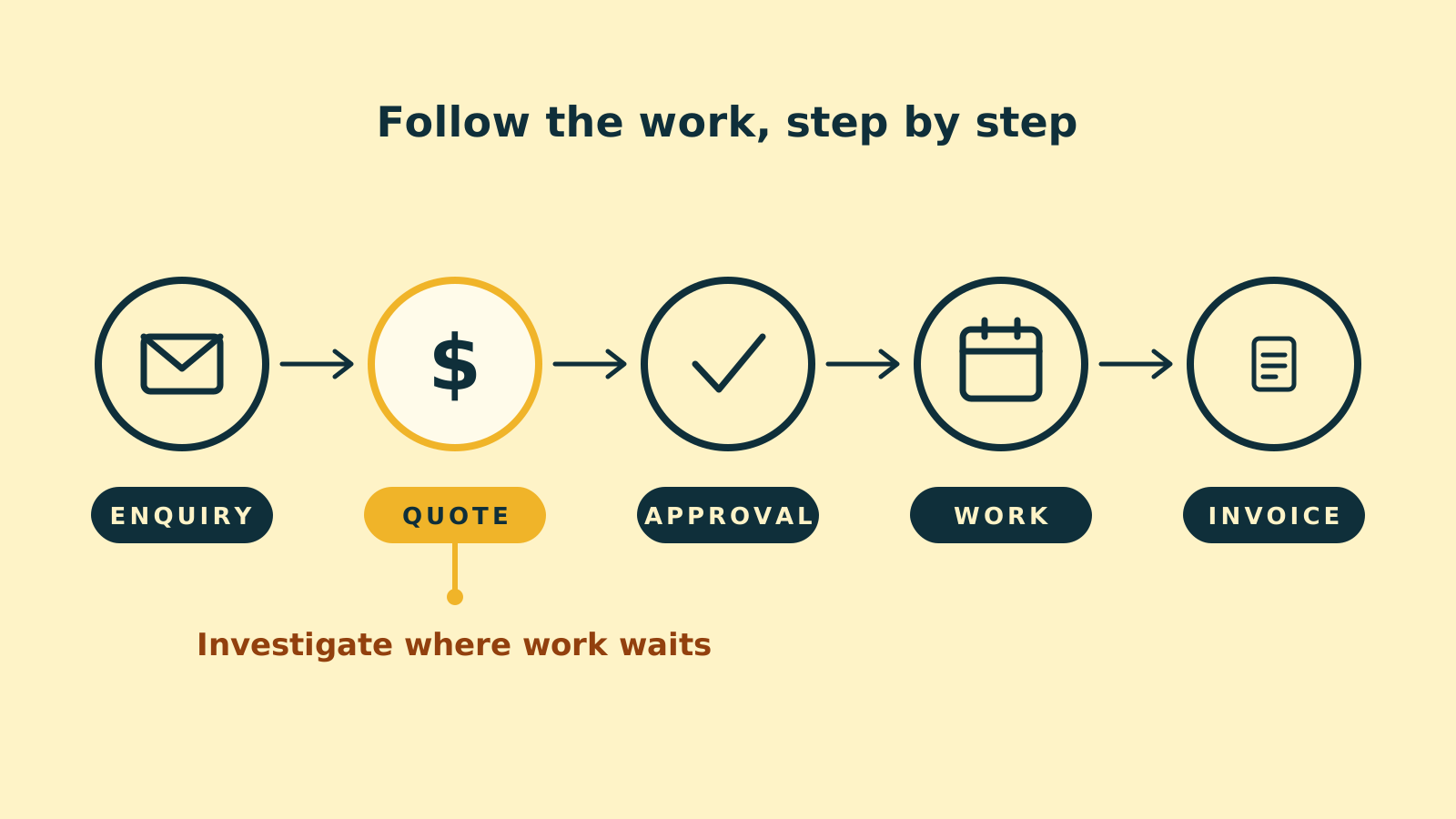
You don't need a process-mapping tool to start. Use a whiteboard or spreadsheet and list the main steps in order. For example:
Enquiry received → qualify → prepare quote → approve quote → schedule work → invoice
Then ask your team:
- Where does work wait before someone picks it up?
- What information or decision is missing when it waits?
- Who or what must act before it can move?
- How many items are waiting, and how many are completed in a normal week?
- Does the queue usually clear, or does it keep growing?
Check the actual work system: your CRM, job board, inbox, spreadsheet, or paper folder. The official process may say a quote takes one day. The real process may include four days waiting for measurements, pricing, or approval.
A simple count can reveal useful patterns. If 15 quotes are waiting and your team completes five a week, that queue represents about three weeks of work at the current pace. It doesn't prove quoting is the cause, but it tells you where to investigate.
Put a price on the delay
Before you decide what to change, estimate what the repeated work costs. For labour time, use:
Hours per week × blended labour cost × 52 = annual labour value
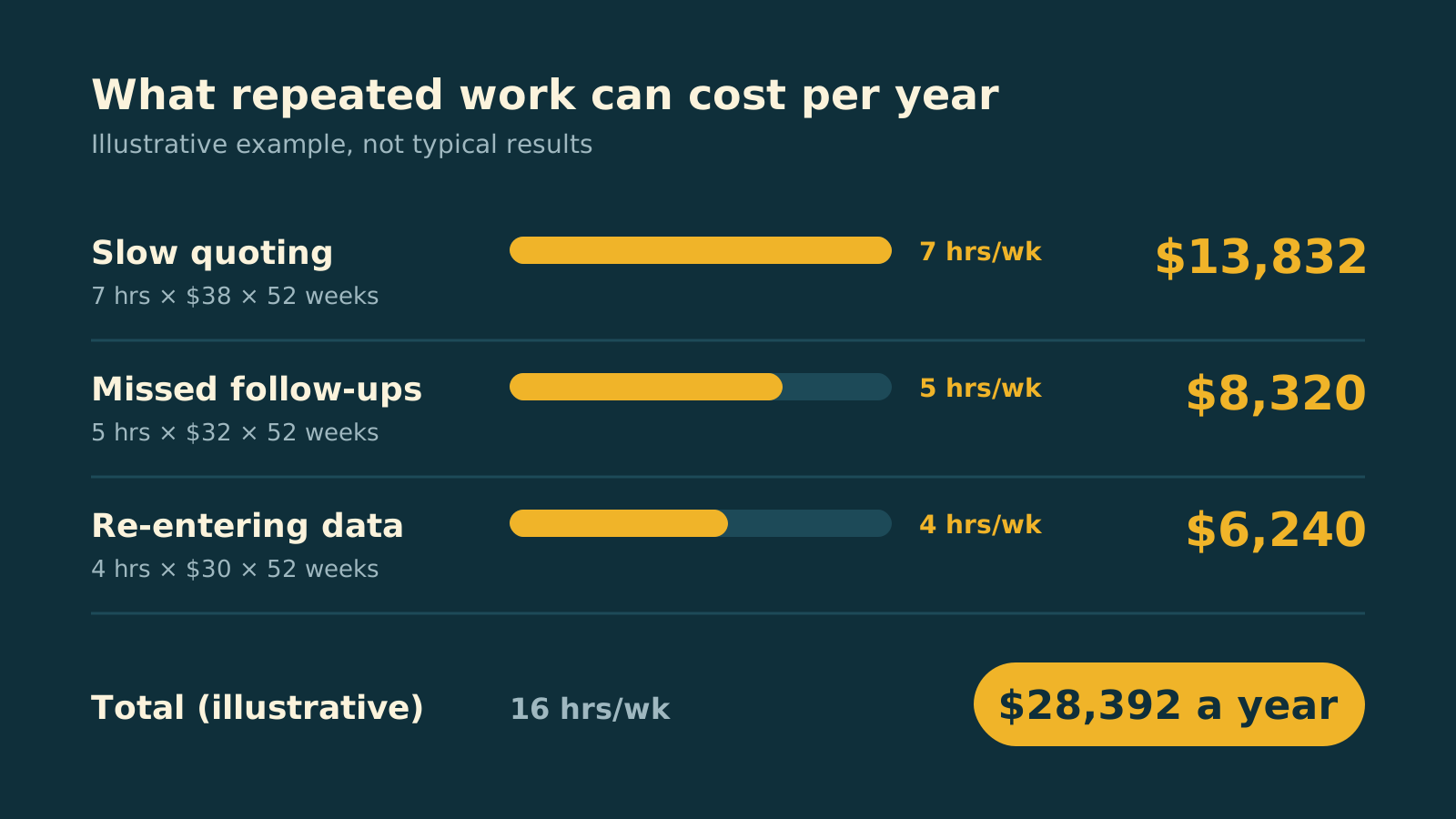
The figures below are illustrative examples only, not typical results. Use your own time and cost estimates, and avoid counting the same hour in more than one category.
- Slow quoting: If chasing missing details and rebuilding quotes takes 7 hours a week, at a blended labour cost of $38 an hour: 7 × $38 × 52 = $13,832 a year in labour capacity.
- Missed follow-ups: If the team spends 5 hours a week finding leads and catching up on overdue follow-ups, at $32 an hour: 5 × $32 × 52 = $8,320 a year.
- Re-entering data: If duplicate entry takes 4 hours a week, at $30 an hour: 4 × $30 × 52 = $6,240 a year.
These estimates value time used. They are not automatically cash savings: if staff remain on payroll, recovered hours become valuable when you redirect them to useful work, avoid extra hiring or overtime, or reduce another measurable cost.
There may also be a revenue impact. For example, a delayed quote could mean a job goes elsewhere. To estimate that separately, use the contribution margin on the work you reasonably believe was lost, not the full sale price. Treat it as an estimate, and don't add it to labour costs if that would count the same impact twice.
Fix the constraint before buying
When a process feels stuck, another tool can seem like a quick answer. But software can speed up a task without fixing the reason work is waiting.
If quotes are delayed because measurements are missing, a quoting platform won't create those measurements. If every job needs the owner's approval, automating the paperwork may still leave work in the approval queue. If records are incomplete, a new system may simply make incomplete records easier to move around.
First, identify the actual cause. Then test a small change that addresses it. That might mean agreeing what information an enquiry must include, setting an approval limit, clarifying who owns follow-up, or reducing duplicate entry between systems. Measure whether the queue shrinks and work moves through faster.
If AI or other software might help, check the process, data, team capacity, and commercial case before committing. Our guides explain how an AI readiness assessment for a small business can surface practical gaps, and how an AI adoption roadmap can sequence the work. If you're comparing options, see how OpsClarity differs from traditional AI consulting firms.
Recheck after the change
A bottleneck can move. If quoting gets faster, approval may become the next place work waits. That doesn't mean the first fix failed; it may mean the process is moving further than before.
Before you change anything, record a simple baseline: how many items are waiting, how long they wait, how many the team completes in a week, and how much time goes into the task. After the change, measure the same things again.
The useful finish line is not "we bought a tool" or "the team is busier." It is a visible improvement in the flow that matters: fewer overdue quotes, shorter waits, less rework, or more completed work without adding avoidable cost.
What to do next
If you can point to the queue, name what it is waiting for, and estimate its cost, you have a practical starting point. If you can't, gather a few weeks of simple counts before making a hiring or software decision.
The OpsClarity AI Readiness Assessment is a guided session that scores your business across data foundation, process definition, team capacity, pipeline hygiene, and commercial case. It creates a roadmap ranked by what pays for itself first and starts at $497.
Prefer to talk it through first? Book a call with Abigale.
Frequently asked questions
What is a bottleneck in business?
A bottleneck is the step in a business process that limits how quickly work can move through the whole process. It often shows up as a queue that keeps building before a person, decision, or task.
How do I find the bottleneck in my company?
Map one process from start to finish. Count the work waiting at each step, note what it is waiting for, and compare how much work arrives with how much gets completed. Investigate the step where waiting repeatedly accumulates.
Is software the fix for a bottleneck?
Not always. Software can help when it addresses a specific cause, such as repeated data entry. It won't resolve unclear ownership, missing information, or unnecessary approval steps by itself. Diagnose the constraint before choosing a tool.
What does a bottleneck cost a small business?
It depends on the time lost, the cost of that time, and any work delayed or lost. An illustrative labour estimate is hours per week × blended labour cost × 52. Keep labour time separate from estimated lost sales, and avoid counting the same impact twice.